
A periodontist is a dentist who specializes in the health of the gums, jawbone, and tooth roots, as well as dental implant surgery. Dr. Travis Steinberg, board-certified periodontist at Etesse Holistic & Cosmetic Dentistry in Solana Beach, CA, treats gum recession, periodontal disease, bone grafts, and sinus lifts on-site. Patients can receive periodontal and implant care in one office instead of being referred to an outside specialist.
Periodontist: Gum and Implant Specialist
What Is Periodontics?
Periodontics is the dental term devoted to everything that is “around the tooth.” This includes tooth roots, gums, and jawbone. A periodontist is a dentist who works around the tooth. A periodontist specializes in diagnosing and treating problems that affect the gums and supporting tissues of the teeth. A periodontist focuses on periodontics, which is the health of your gums and jawbone as well as dental implant surgical therapy.
Here at Etesse Holistic & Cosmetic Dentistry, we have a board-certified periodontist on our team that works directly with patients in our office. This allows our patients to receive many procedures right in our office without needing to visit an off-site periodontist!
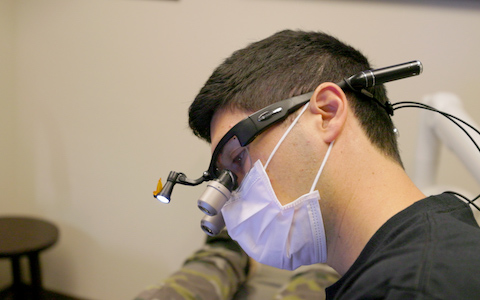
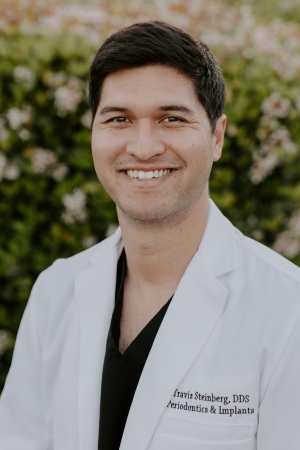
Our Board-Certified Periodontist
Dr. Travis Steinberg, a San Diego native and distinguished graduate of UCLA, is a devoted periodontist dedicated to elevating the oral well-being of Solana Beach residents. His unwavering commitment to understanding the intricate link between oral and systemic health shapes his patient-centered approach. With a specialization in periodontal and dental implant surgery, Dr. Steinberg not only brings academic excellence but also practical expertise to our practice. He continues his association with UCLA by serving as the literature course director for the current cohort of residents, contributing significantly to the education and training of upcoming periodontal professionals.
Beyond his professional pursuits, Dr. Steinberg finds joy in various activities outside the dental office. An avid sports enthusiast, he embraces the benefits of an active lifestyle. Alongside his wife, Dr. Etesse, he enjoys exploring new culinary delights at restaurants and discovering the serenity of hiking trails. This personal connection extends seamlessly into their professional collaboration, ensuring a unified and comprehensive approach to dental care for our patients.
Learn More About Dr. Steinberg
Periodontal Procedures Offered at Etesse Holistic & Cosmetic Dentistry
Our in-house periodontist, Dr. Travis Steinberg, is trained in many types of oral procedures. He can help you with gum disease, missing teeth, tongue ties, and more!
Dental Implants
Dental implants are artificial tooth roots, typically made from titanium, that we place into your jawbone. These implants provide a robust base to support replacement teeth, like crowns, bridges, or dentures. This gives you a natural-looking and functioning tooth, bringing your smile back to life.
Bone Grafts
Bone grafts are often performed alongside dental implant surgery. If a person does not have enough bone tissue to support teeth or implants, a bone graft may be needed. Bone grafts help reinforce the dental bone that is needed for stabilizing teeth.
Sinus Lifts
Sinus lifts are a surgical procedure that adds bone to the upper jaw. The bone is placed around the area that supports the molars and premolars. A sinus lift is often needed before getting dental implants if there isn’t enough bone in the upper jaw, or the sinuses are too close to the jaw, for the implants to be placed.
Gum Recession Treatment
Gum recession is when the gum tissue is pulling away from your teeth and exposing the roots underneath.
This can make your teeth more sensitive and vulnerable to cavities. Our periodontist can help diagnose and provide nonsurgical and surgical treatments for gum recession, depending on the severity.
If needed, our periodontist can treat gum recession through surgery. In gum recession surgery, our periodontist will use a gum graft to replace the missing gum tissue and stitch it in place.
Frenectomy
A frenectomy is a simple surgical procedure that we perform to remove or adjust the small bands of tissue connecting your lips to your gums, or your tongue to the floor of your mouth, known as frenums.
Sometimes, these frenums can be overly thick or tight, limiting movement and causing issues such as speech difficulties, gum recession, or gaps between teeth. By carefully removing or adjusting this tissue, we can alleviate these problems and improve your oral function and comfort. It’s typically a quick procedure with minimal discomfort and recovery time.
Platelet-Rich Fibrin (PRF) for Faster and Better Healing
At our dental practice, we use Platelet-Rich Fibrin (PRF) to help improve bone and soft tissue regeneration. PRF is made from a small sample of your blood that is spun in a centrifuge to create a membrane that is placed on your surgical site. This procedure is very simple and ensures that the surgical site is free from infection and heals faster.
Periodontal Disease Treatment
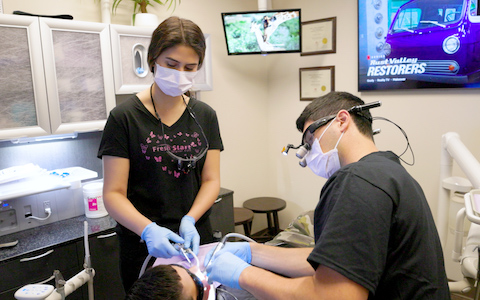
Periodontitis is a gum disease that can cause red, bleeding, or swollen gums. Depending on the severity of your gum disease, our periodontist could prescribe a non-surgical or surgical periodontal disease treatment.
For the nonsurgical approach, our periodontist could recommend scaling and root planing to do a deep dental cleaning. For a surgical treatment for periodontal disease, our periodontist could recommend flap surgery, dental bone grafts, or gum grafts.
Our periodontist will answer any questions you might have about your treatment plan!
Learn More About Gum Disease Treatment
LANAP Periodontal Regeneration
The LANAP Protocol is a laser based treatment for gum disease. It stands for Laser Assisted New Attachment Procedure. The LANAP protocol uses the Millenium PerioLase® MVP-7 Laser, which is the only laser procedure that is FDA certified for true periodontal regeneration. The laser operates at a specific wavelength that targets the bacteria that contribute to gum disease while leaving healthy tissues intact.
Patient benefits of LANAP laser periodontal surgery include faster healing, less discomfort, reduced inflammation, reduced gum recession, and decreased complications for patients with health concerns.
Dr. Travis Steinberg is an expert in treating gum disease as a board certified periodontist and is a member of the Institute for Advanced Laser Dentistry. He completed an extensive year-long course in order to bring the LANAP protocol to his patients. While not every patient is a candidate for laser periodontal surgery, it is an important treatment option to consider. If you are concerned about your gum health, ask about LANAP at your next visit with Etesse Holistic and Cosmetic Dentistry.
Post-Op Instructions
Do not eat for at least two hours or until the anesthesia has worn off.
(Extractions, Periodontal Gum Surgery, Implants, Tissue Grafts, and Bone Grafts)
General Post-Op Instructions
Avoid heavy or strenuous exercise for 2-3 days. Return to normal activities as tolerated.
Avoid drinking out of a straw, swishing forcefully, or spitting forcefully. These processes will disrupt the clotting process and result in bleeding.
No smoking as this can cause altered healing and higher risk for infection.
No alcohol or alcoholic mouthwash during the healing process.
Diet: No hot, spicy, crunchy or hard foods for the first few days after surgery. Avoid any crunchy or hard foods until stitches are removed or until you return for a post-operative visit. Soft foods are ideal for the first few days following surgery. Try to keep food away from the surgical area.
Oral hygiene: Keeping your mouth clean is essential to healing. Please continue with normal brushing and flossing in other areas of your mouth with the exception to the surgical area. Avoid hygiene in the surgical area until stitch removal or your post-operative appointment. If a simple surgical procedure was done and no post-op visit is necessary, normal hygiene can resume after 10 days.
Surgical site care
You may rinse the surgical site with warm salt water 2-3 times per day. Do not swish vigorously. Put the salt water in your mouth and gently swish for 30 seconds before letting it fall out of your mouth. Dilution: 1/2 teaspoon salt in 8 oz water.
Sutures may have been placed to help control bleeding and promote healing. They may fall out or dissolve throughout the next few days. The goal is to keep the sutures in place for as long as possible.
You will have oozing from the surgical site and a red or pink color to your saliva, which is normal.
Swelling usually peaks at 3-4 days after surgical procedures and then begins to decrease. Bruising may occur adjacent to the site, on your cheeks, or near your nasal region.
Prescriptions: You may be prescribed antibiotics, anti-inflammatory medications, mouth rinses, or other pain reducing medications. Please take as prescribed. If taking antibiotics, finish the course of antibiotics
Things to watch out for
Bleeding: After surgical procedures it is common to have a red color in your saliva and for some oozing to occur. If severe bleeding occurs, hold gauze, a paper towel or a damp black tea bag with firm pressure against the surgical or extraction site for 10 minutes. If a large amount of bleeding occurs, please also contact us.
Swelling: Some swelling and inflammation may occur in the first 3-5 days. Ice packs may be used (10 minutes on then 10 minutes off) to decrease swelling and bruising. If swelling persists for more than 7 days, please contact the office.
Infection: A slight fever (99-100 degree) is common after surgical procedures. If a higher fever develops or the fever persists, please contact the office. Signs of infection include fever, severe swelling, and pus (white, milky fluid drainage). If infection develops, please contact the office.
Dry Socket (after extractions): Premature dissolving or loss of a blood clot following an extraction procedure may result in a “dry socket.” This typically occurs on day 3 to 5 after the extraction, with a persistent throbbing pain in the jaw. To avoid a dry socket, do not smoke and do not use straws.
Dental implants
If an implant was done, please avoid chewing or functioning around the implant area. Placing forces onto implants before they are healed may lead to implant failure. There may be a small metal component visible after an implant is placed. Please avoid chewing on this metal component and let us know immediately if it becomes loose. If it falls out, please save the metal component and inform the office immediately.
Soft tissue grafts and palatal stents
Palatal stents are used after soft tissue graft procedures. If you were given a stent, wear it for the first 24 hours after the procedure. After that, you can take the stent out after eating to rinse it off and when performing oral hygiene. Sleep with the stent in and wear the stent when eating. Wear this stent for at least the first 7 days after the procedure. You may wear the stent longer than 7 days for your comfort.
Call Today to Schedule an Appointment with Our On-Site Periodontist!
Our board-certified periodontist is able to provide you with the treatments you need for healthier gums! No need to travel to multiple dental offices to see a periodontist, we have one right here in our office! Call today to schedule your appointment so you can start your treatment for healthier gums!
Book Online
